
Operational Test Airman builds radar range, sets standard for Air Force innovation
In Air Force Doctrine Publication 1, Air Force Chief of Staff Gen. CQ Brown, Jr. wrote that “Victory goes to the rapid integrator of ideas.” These ideas derive from our Airmen, whose innovation and courageous problem-solving skills solve the complex challenges that come with a rapidly evolving global environment.
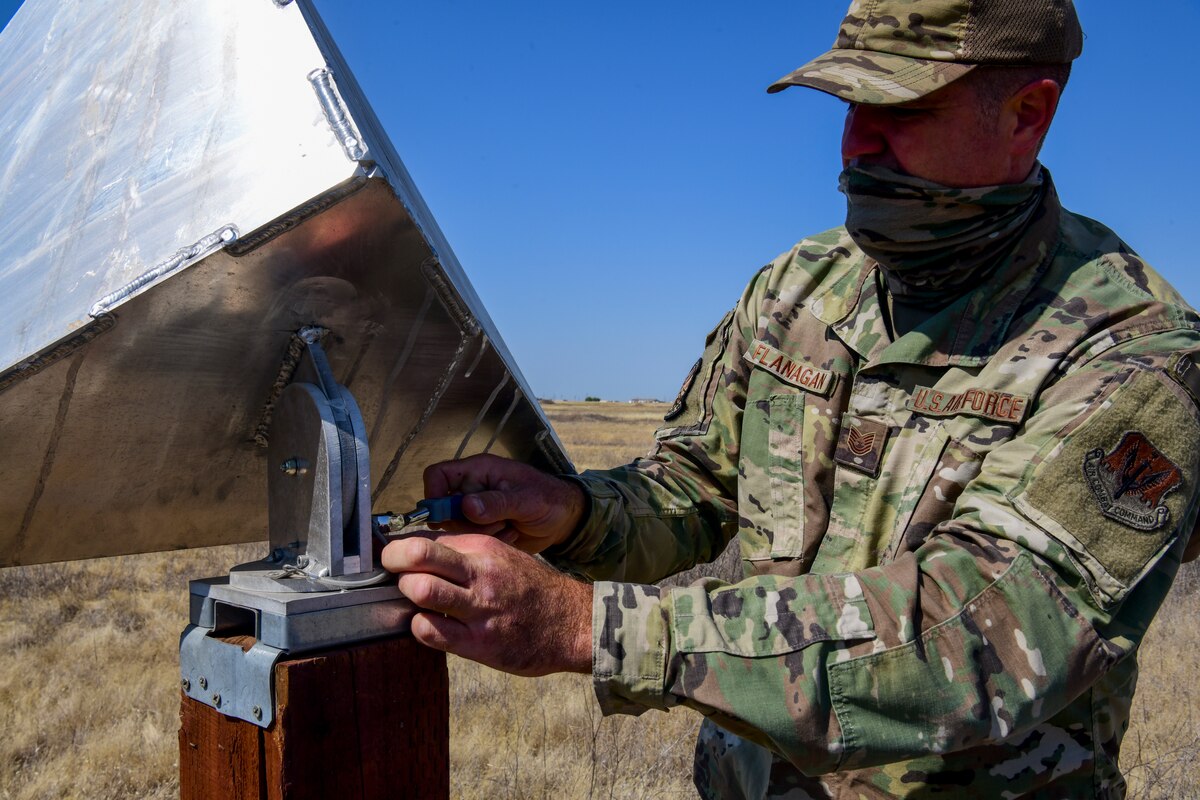
One of these “rapid integrators” is Tech. Sgt. Kevin Flanagan, an Operational Test imagery analyst at the 410th Test and Evaluation Squadron who built an entire range of radar targets used to test the accuracy of U-2 and RQ-4 Global Hawk sensors.
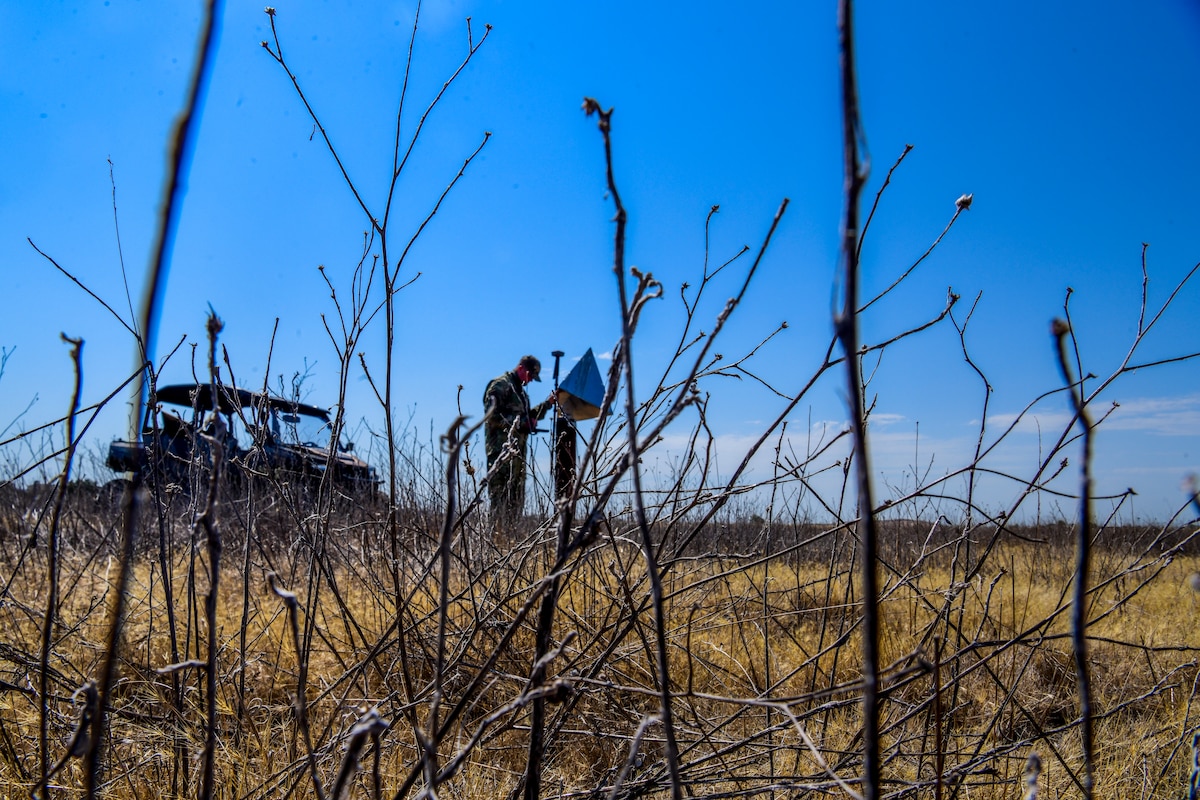
Test programs rely on radar targets at surveyed sites to precisely identify the Target Location Error of various sensors. Similar to large mirrors, these targets reflect radar energy back to airborne sensors. The high volume of missions and significant number of hours required to maintain targets at the previous radar range led Flanagan to invent sustainable, low-cost alternatives consisting of new 24–28-inch radar corner reflectors.
“Every problem has a solution, you just have to look for it,” Flanagan said. “I love problems because of the challenge.”
His two-year project that began with cardboard and aluminum foil prototypes is now a robust radar range of 28 metal targets that saves the Air Force nearly $493K and 23 flight hours annually.
“We overuse the term instrumental when we talk about people’s contributions to the mission, but we legitimately couldn’t do Operational Test on the U-2 and RQ-4 without Tech. Sgt. Flanagan,” said Lt. Col. Grant Raup, 410th TES commander. “There are certain Airmen that you know you can trust to get something done and get it done right. Sergeant Flanagan is one of those individuals.”
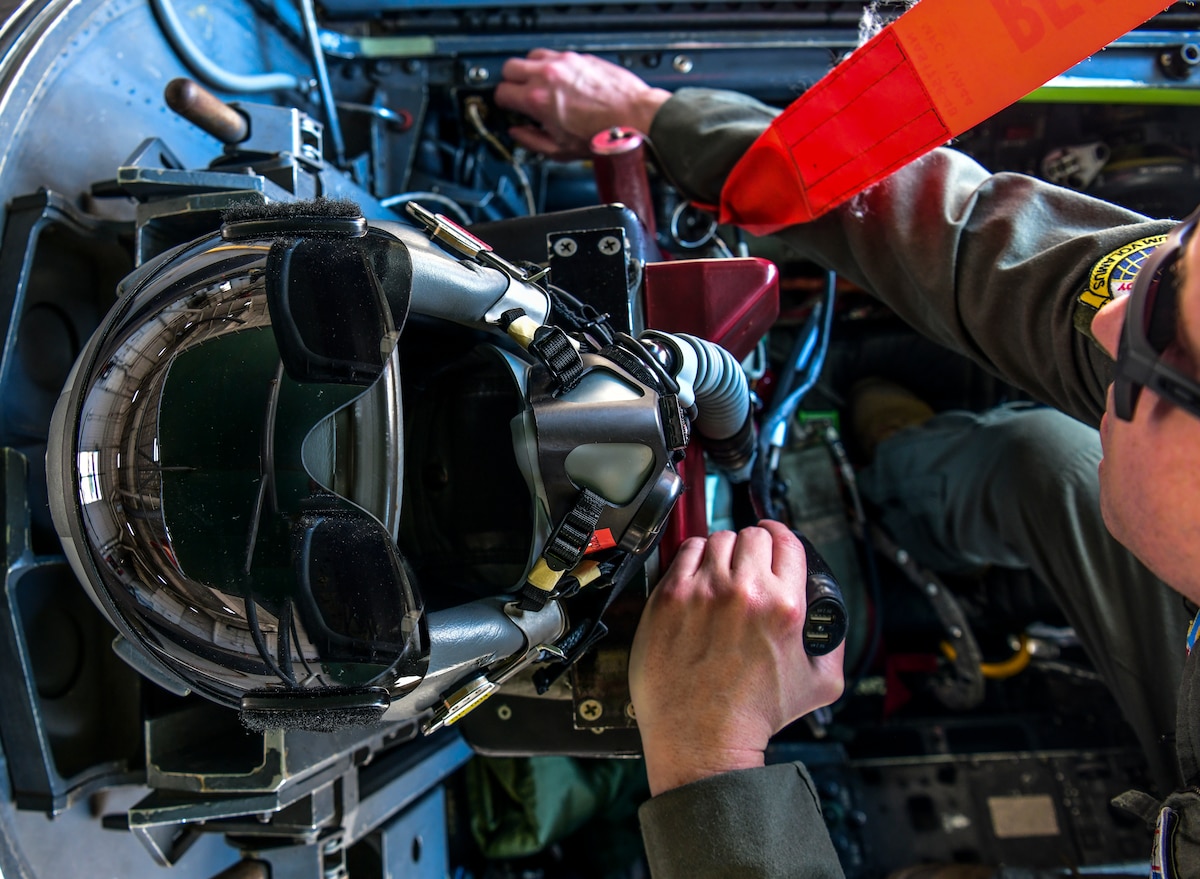
Another way Flanagan directly contributed to unit success was by designing and developing a new Universal Serial Bus charging cable that enables Airmen to charge equipment during long duration operational test flights. Flanagan took note of previous cable deficiencies and created a smaller, more reliable, and more readily available USB cable within a week. Flanagan’s new cable costs a total of $70 per unit, while the previous cable cost $600 per unit.
"The big win behind this solution is that it provides us uninterrupted power for the technology that we rely on for real-time weather, traffic, backup navigation, emergency checklists, and a whole litany of tools that keep us safe for long duration flights that the internal batteries cannot support," Raup said.
While many aspects of these projects came to fruition through Flanagan’s proactiveness and skill in construction, he credits those who were always willing to lend a hand as the real reason these projects have succeeded.
“Nothing I have done has been a solo task,” Flanagan said. “I lean heavily on my teammates for help and brainstorming; the collaboration piece is invaluable.”
